
You know what separates remodeling projects that go smoothly from ones that become financial nightmares? It’s not luck. It’s what you do before the first wall comes down.
I’ve watched too many people get excited about their Pinterest boards and jump straight into demolition without asking basic questions like “do I need a permit for this?” or “where will I shower for the next three months?” Then they’re shocked when the city shuts down their project or their marriage gets tested by living in construction chaos.
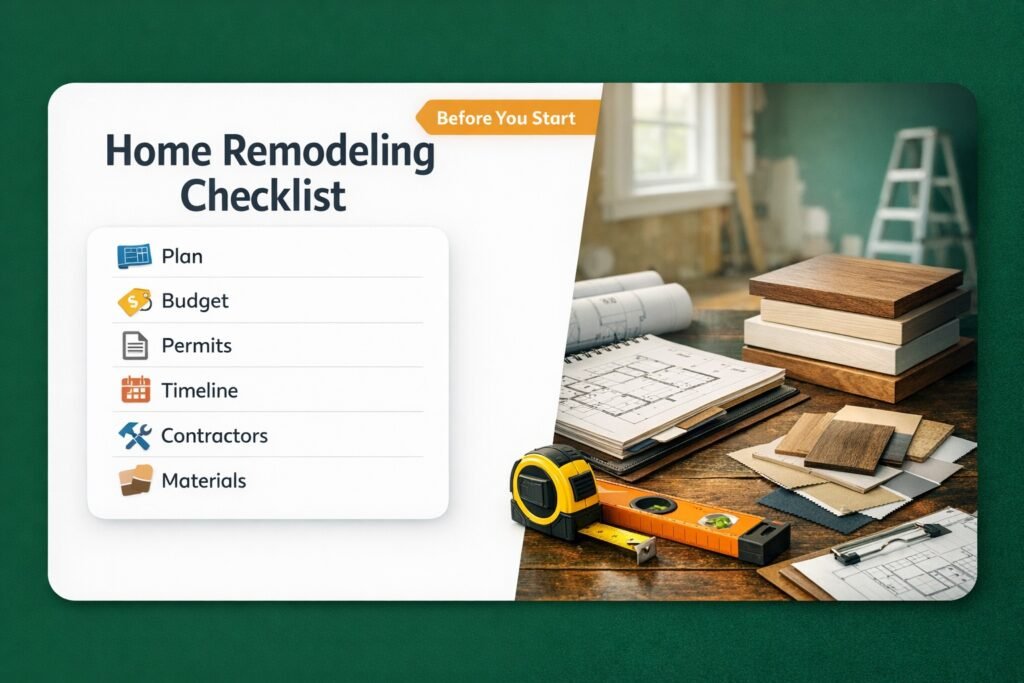
Here’s the truth: the boring prep work you do before construction starts determines whether your remodel succeeds or fails. This checklist covers everything you need to nail down first. Skip any of these steps and you’re basically gambling with your money and sanity.
Let’s get into it.
Define Your Real Goals (Not Pinterest Dreams)
Before you spend a dime, get clear on why you’re actually doing this.
Write Down Specific Objectives
“I want a nicer kitchen” is too vague. That could mean anything from new cabinet hardware to a complete gut job.
Try this instead: “I need more counter space for meal prep and better storage so we stop stacking pots in the oven.” Or “I want an open layout so I can watch the kids while cooking.”
See the difference? Specific goals help you make decisions later. When your contractor suggests expanding the project scope (and they will), you can check whether it serves your actual objectives or just sounds cool.
Separate Needs from Wants
Make two lists right now.
Needs: Things that must happen. Fixing structural damage. Replacing a dying water heater. Adding space because your family’s outgrown the house. These aren’t negotiable.
Wants: Things you’d like if budget allows. Heated floors. Custom tile work. That fancy refrigerator with the touch screen.
When you inevitably go over budget, this list tells you what to cut without derailing the whole project.
Get Brutally Honest About Money
Nothing kills remodels faster than running out of money halfway through. Let’s prevent that.
Calculate Your True Budget
How much cash do you have? How much can you borrow? What monthly payment fits your life without causing stress?
Don’t stretch to your absolute maximum. You need cushion for:
- Hidden problems you’ll find during demo (trust me, there are always some)
- Regular emergencies unrelated to construction
- Living costs if things take longer than planned
Here’s a hard rule: if this remodel would drain your emergency fund or max out your credit, you can’t afford it yet. Save more first.
The 20% Contingency Rule
Add 20% to your estimated budget. Minimum.
“But I’ve planned everything perfectly!” Doesn’t matter. Walls hide surprises. Materials get back-ordered. You’ll change your mind on something. That 20% buffer is what keeps you from halting construction mid-project while you scramble for cash.
Every successful remodel I’ve seen had contingency funds. Every disaster didn’t.
Research Real Costs in Your Area
Online calculators give ballpark numbers, but talk to actual humans who’ve done similar work recently. Costs vary wildly between regions and even neighborhoods.
A kitchen renovation in your market might run $30,000 or $60,000 depending on finishes and layout changes. Know what’s realistic before you fall in love with granite countertops you can’t afford.
Figure Out the Permit Situation
This is the part people skip, and it bites them hard.
What Typically Needs Permits
Generally, you need permits for:
- Moving or removing walls (especially load-bearing ones)
- Adding square footage to your home
- Major electrical work beyond swapping fixtures
- Plumbing changes or additions
- HVAC installation or modifications
- Structural repairs or reinforcements
- Changing your home’s exterior or roofline
But requirements vary by location. What’s fine without permits in one city might be illegal in another.
How to Check Requirements
Call your local building department. Tell them what you’re planning. They’ll tell you if you need permits.
Better yet, visit in person with rough sketches. Inspectors are usually helpful when you’re respectful and upfront about wanting to do things right.
Why Permits Actually Matter
Yes, permits cost money and slow things down. But building without them:
- Violates your homeowner’s insurance (claim denied if something goes wrong)
- Creates problems when you sell (buyers’ lenders often require permit verification)
- Can force you to tear out finished work and redo it legally
- Results in fines and legal headaches
Pay for the permits. It’s way cheaper than the alternatives.
Review Your Insurance Coverage
Your homeowner’s insurance might not cover what you think it covers during construction.
Call Your Insurance Agent Now
Ask these specific questions:
- Does my policy cover construction-related damage?
- What happens if a contractor or their worker gets injured on my property?
- Are materials and tools covered if they’re stolen from the site?
- Do I need additional coverage during major construction?
Some policies exclude construction work entirely. Others require notification before starting. Find out which applies to you.
Verify Contractor Insurance
Any contractor you hire should have:
- General liability insurance
- Workers’ compensation insurance
- Vehicle insurance
Don’t just take their word for it. Ask for certificates of insurance. Call the insurance companies to verify coverage is active and current.
Contractors without insurance are ticking time bombs. Someone gets hurt on your property without workers’ comp? You’re potentially liable for their medical bills and lost wages.
Plan Where You’ll Actually Live
Construction is messier and more disruptive than you’re imagining right now.
Can You Stay Home?
For small projects like a single bathroom update when you have another bathroom, staying works fine.
For major work—especially anything touching the kitchen or multiple bathrooms—staying home is miserable. Constant noise starting at 7 AM. Dust coating everything. No privacy. Strangers in your house all day.
Be realistic about your tolerance for chaos. If you have young kids, work from home, or have health issues, living through major construction might not be feasible.
Alternative Housing Options
You’ve got choices:
- Stay with family or friends (free but tests relationships)
- Short-term rental (Airbnb or corporate housing)
- Extended stay hotel
- RV in your driveway (yes, really)
Factor housing costs into your budget. Four months at $2,500/month is $10,000 you need to account for.
Set Up Temporary Living Arrangements
If you’re staying during a kitchen remodel, create a temporary kitchen somewhere. Garage, basement, spare room—wherever works.
You need:
- Mini fridge or cooler
- Microwave
- Hot plate or electric kettle
- Coffee maker (non-negotiable for most people)
- Paper plates and plastic utensils
- Somewhere to wash hands and basic dishes
It’s not glamorous, but it beats takeout every meal for three months.
Find and Vet Contractors Carefully
This step determines everything. Good contractors make projects smooth. Bad ones create nightmares.
Get Multiple Bids
Three contractors minimum. All bidding on identical scope so you’re comparing apples to apples.
Don’t automatically go with the lowest bid. Crazy-low prices usually mean they cut corners, use cheap materials, or will nickel-and-dime you with change orders later.
Essential Verification Steps
Check licensing: Verify they’re properly licensed for the work in your state and city. Most states have online verification tools.
Confirm insurance: Get certificates proving current liability and workers’ comp coverage. Call to verify they’re active.
Call references: Don’t just collect names—actually call three recent clients. Ask about timeline, budget adherence, communication, and how they handled problems.
See completed work: Photos lie. Visit actual finished projects if possible. You’ll see real quality, not staged pictures.
Red Flags That Scream “Run Away”
Avoid contractors who:
- Want most money upfront (standard is 10-20% down, rest tied to milestones)
- Say permits aren’t necessary to “save you money”
- Can’t provide insurance certificates
- Won’t give recent references
- Pressure you to sign immediately with “special pricing”
- Quote way below everyone else without clear explanation
- Don’t use written contracts
Trust your gut. If something feels off during initial conversations, it probably is.
Create a Detailed Project Scope
Vague plans cause disputes, change orders, and budget explosions.
Specify Everything in Writing
Your scope of work should include:
- Exact rooms and areas being modified
- Specific materials with brands, models, and colors (not “granite countertops” but “Cambria quartz, Torquay design, 3cm thickness, polished finish”)
- Fixture model numbers
- Paint colors with specific paint brand and sheen
- All structural, electrical, and plumbing work planned
- What’s explicitly NOT included
The more detail now, the fewer arguments later.
Address the What-Ifs Upfront
Your contract should cover:
- How change orders work and get priced
- What happens if timeline slips
- How unexpected discoveries get handled
- Payment schedule tied to specific completed work
- Warranty terms
- Who handles cleanup and debris removal
- How disputes get resolved
Everything in writing. Verbal promises become “I thought you said” fights when memories differ.
Think About Systems While Walls Are Open
If you’re opening walls anyway, consider upgrading old systems now. It’s cheaper than doing it separately later.
Electrical Assessment
When was your electrical panel last updated? Homes built before 1990 often need panel upgrades to handle modern electrical loads.
Upgrading your electrical system while walls are open costs a fraction of what it costs as a separate project. Plus, old wiring is a fire hazard.
HVAC Evaluation
How old is your furnace and air conditioner? Are you changing your home’s layout in ways that affect airflow?
Modern heating and cooling systems are more efficient and might qualify for rebates or tax credits. If your current system is 15+ years old, replacement makes sense during a major remodel.
Roof Condition Check
Seems unrelated to interior work, but think about it: you’re investing serious money inside your home. If your roof needs replacement soon, do it first.
Nothing worse than finishing a beautiful remodel and immediately having to deal with roof repairs that could’ve been coordinated.
Energy Efficiency Opportunities
Opening walls? Perfect time for upgraded insulation that’ll lower utility bills for decades.
Doing roof work? Maybe solar panels make financial sense with current incentives and your energy usage.
Make Material Selections Early
Long lead times on materials cause delays. Order stuff early.
Research Lead Times Before Planning Timeline
Some materials ship immediately. Others take months. Custom cabinets, specialty tile, unique fixtures—these often have 8-12 week lead times, sometimes longer.
Ask suppliers about current delivery times. Supply chains are still unpredictable. What shipped in two weeks last year might take eight now.
Lock in Major Decisions Fast
Before construction starts, finalize:
- Cabinet style, finish, and hardware
- Countertop material and color
- Flooring type throughout affected areas
- Light fixtures and ceiling fans
- Plumbing fixtures (faucets, sinks, toilets, shower heads)
- Appliances if replacing them
- Tile for bathrooms or backsplashes
- Paint colors for all surfaces
Order long-lead items as soon as you sign contracts. They’ll arrive when needed instead of holding up your project.
Get Physical Samples
Don’t rely on photos or website images. Get actual samples.
Put samples together to see how they look in combination. Your flooring choice next to cabinet samples next to countertop chips. See the real colors and textures together, not idealized photos.
This prevents “I thought those would coordinate better” disasters when everything’s already installed.
Prepare Your Home for Construction
Do this prep work before demolition day arrives.
Clear Work Areas Completely
Remove everything from construction zones and adjacent rooms. Furniture, artwork, decorations—everything.
Dust travels farther than you expect. That family photo three rooms away? It’ll have drywall dust on it if you don’t move or cover it.
Protect What’s Staying
Seal doorways to non-construction areas with plastic sheeting. Cover HVAC vents so dust doesn’t infiltrate your system.
Move or heavily cover furniture in nearby rooms. Construction vibrations knock things off walls and shelves.
Establish Contractor Protocols
Decide how contractors access your home daily. Are you giving them a key? Installing a lockbox? Staying home to let them in?
Determine which bathroom workers can use. Where they can eat lunch. Where they’re allowed to park.
Set these expectations clearly before day one. Prevents uncomfortable conversations mid-project.
Talk to Your Neighbors
Your remodel affects people around you. Give them a heads up.
Pre-Construction Courtesy
Visit neighbors before work starts. Tell them:
- When construction begins and estimated end date
- Normal work hours (usually 7 AM – 5 PM weekdays)
- Expected noise levels and disruption
- Where construction vehicles will park
- Where the dumpster will sit
- How to reach you with concerns
Most neighbors are understanding when you communicate proactively. They get angry when surprised by sudden noise and disruption.
Ongoing Communication Matters
If issues come up—project running longer than expected, louder than planned, parking causing problems—address them quickly and politely.
Small gestures help. Bring cookies over to apologize for the noise. Offer to cover their car if exterior work is creating dust.
You’ll live next to these people after construction ends. Keep relationships positive.
Set Up Project Management Systems
Organization prevents chaos and forgotten details.
Create a Budget Tracker
Spreadsheet tracking:
- Budgeted amount for each category
- Actual spending to date
- Remaining budget
- Change orders and their costs
- Payment schedule and what’s been paid
Update it weekly. You’ll know exactly where you stand financially at all times.
Establish a Timeline
Work with your contractor to map out:
- Project start date
- Demolition phase
- Rough-in work and inspections
- Drywall and finishing
- Final fixtures and trim
- Project completion target
Build buffer into the schedule. Contractors rarely finish early. If they say 10 weeks, plan for 12-14.
Document Everything
Take photos and videos of every surface before work starts. Date-stamped. Multiple backups (cloud plus external drive).
If disputes arise about pre-existing damage versus construction damage, photos resolve arguments immediately.
Establish Communication Expectations
Clear communication prevents most contractor conflicts.
Regular Check-Ins
Schedule weekly progress meetings minimum. More often for complex projects or if you’re not on-site daily.
Determine preferred communication method. Text? Email? Phone? Make it consistent.
Decision-Making Authority
Who can make on-site decisions when you’re not available? If you’re working during construction hours, someone needs to answer contractor questions quickly.
Set limits. Maybe the foreman can decide minor issues without approval, but changes costing over $500 require your sign-off.
Get this clear upfront.
Consider the Scope Beyond Your Initial Project
Sometimes it makes sense to expand what you’re doing.
Related Work Worth Adding
If you’re already expanding your home’s footprint, would it make sense to address the driveway that’s cracking while equipment’s already on-site?
If contractors are painting interior rooms, should they also handle exterior painting that needs refreshing?
Think about related projects that make sense to bundle. You’ll save on mobilization costs and get everything done at once.
The Full Picture
Sometimes what starts as one room leads to realizing the whole house needs attention. If that’s your situation, step back and consider planning the complete transformation properly rather than doing piecemeal projects.
Better to do it right once than cheaply three times.
Final Reality Check Before Starting
Go through this mental checklist one last time:
Budget: Do you have 20% contingency? Can you cover temporary housing if needed? Is your financing actually secured, not just pre-approved?
Permits: Are they approved and posted? Does your contractor have copies?
Contractors: Have you verified their license, insurance, and references? Is everything in writing?
Materials: Are long-lead items ordered? Do you have all samples and have you confirmed final selections?
Living arrangements: Do you have a realistic plan for where you’ll stay and how you’ll function during construction?
Insurance: Have you notified your insurance company and verified coverage?
Timeline: Does everyone—you, your contractor, your family—agree on the schedule and completion date?
If you answered “yes” to all of these, you’re actually ready to start. If any answer is “no” or “sort of,” stop. Address it before demolition begins.
When to Get Professional Help
Look, this checklist is thorough, but it might feel overwhelming. That’s normal.
If you’re uncertain about any of this—budgeting, finding contractors, coordinating trades, managing timelines—that’s exactly when experienced remodeling professionals earn their keep.
Good contractors and project managers handle this stuff daily. They know the local permit process, have vetted subcontractor relationships, understand realistic timelines, and prevent the expensive mistakes that come from inexperience.
The cost of professional help is almost always less than the cost of screwing up a major remodel because you didn’t know what you didn’t know.
The Bottom Line
Home remodeling is exciting. It’s also expensive, disruptive, and stressful—even when everything goes right.
But here’s the thing: most of the stress comes from poor preparation, not from construction itself. The disasters you hear about—contractors who disappear, budgets that double, projects that drag on for months beyond schedule—almost all of them trace back to skipping steps on this checklist.
Do the boring prep work. Verify everything. Get it all in writing. Budget properly. Vet contractors thoroughly.
It’s not glamorous. You’d rather be picking tile patterns. But this foundation work is what separates projects that succeed from ones that become cautionary tales.
Take the time to do it right. Your future self—the one living in your beautifully remodeled home—will thank you.